Carpet Stains, Odors & Wear: Troubleshooting Guide for Clarksville Homes
What to do in the first 10 minutes, the mistakes that make stains permanent, and when to call a professional.
Red wine on the beige carpet. A dog who could not wait until morning. A traffic lane that used to match the rest of the room. Carpet problems all feel like emergencies, but most of them respond to the same thing: the right action, fast, and the wrong action avoided. This guide walks through the stains, odors, and wear patterns Clarksville homeowners deal with most, what to do in the first ten minutes, and how to tell when a problem needs professional help.
A quick framing note: everything below is general stain-care guidance consistent with industry best practices, including the Carpet and Rug Institute's cleaning and maintenance guidelines (Carpet and Rug Institute, n.d.). It is not a guarantee that any specific stain will come out. Some stains are permanent, and part of good troubleshooting is knowing which ones before you make them worse.
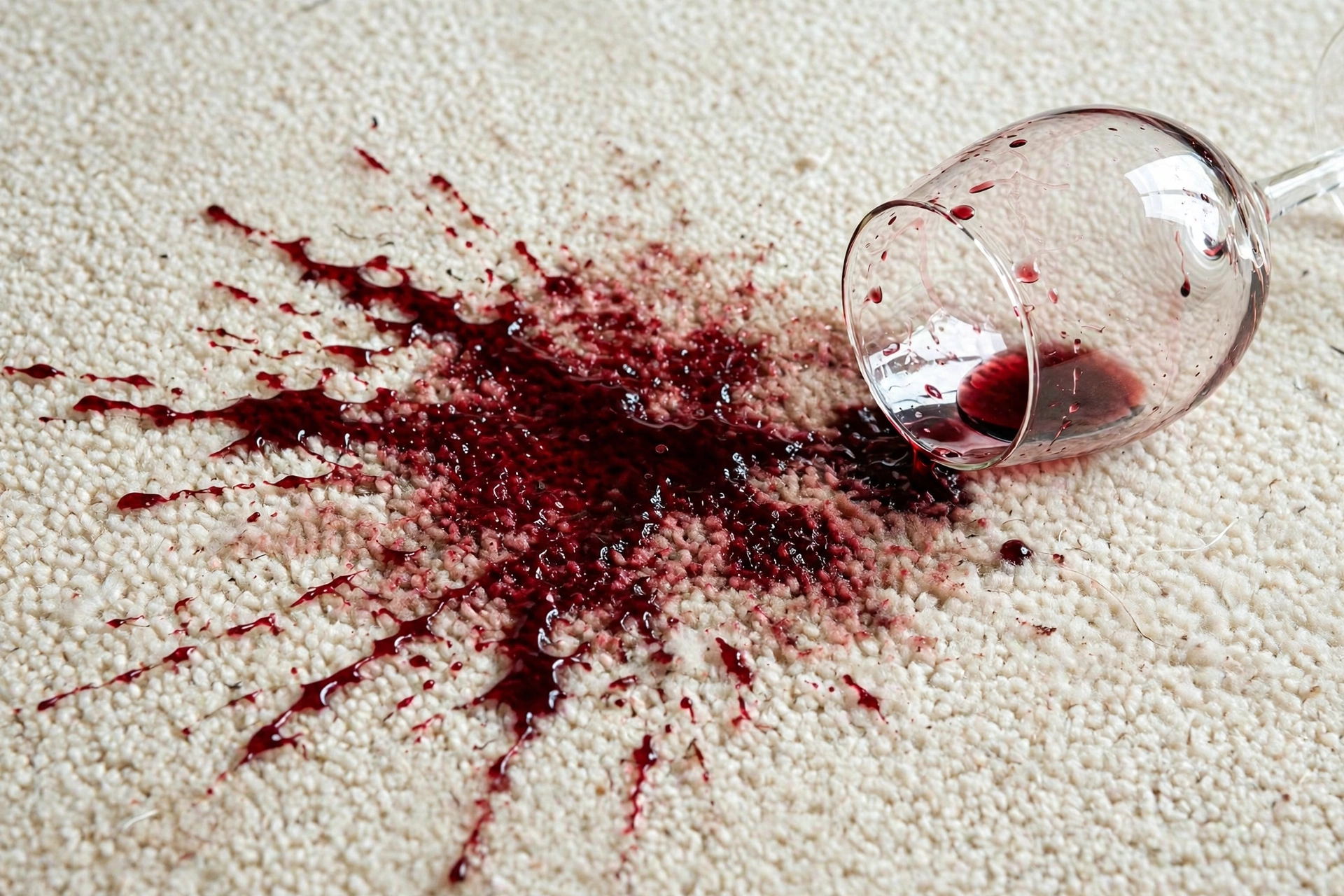
The First 10 Minutes: The Universal Spill Protocol
Whatever just hit your carpet, the first ten minutes matter more than the next ten hours. Fresh spills are dramatically easier to remove than set stains, because the spilled material has not yet bonded with the fibers or wicked down into the padding. Here is the protocol that applies to nearly everything:
- Act immediately. Do not finish the movie, do not wait until morning. Every minute a spill sits, it spreads wider and sinks deeper.
- Remove solids first. Scoop up anything solid with a spoon or dull knife, working from the outside of the spill inward so you do not spread it.
- Blot, never rub. Press a clean white cloth or paper towels straight down onto the spill, lift, and repeat with a fresh section of cloth. Rubbing grinds the stain deeper and can distort the carpet pile permanently.
- Work outside in. Always clean from the outer edge of the stain toward the center. This prevents the spot from growing as you work.
- Use the right liquid. For most fresh spills, plain cool water is the safest first step. Dampen, blot, repeat. Add cleaning agents only if water alone is not working, and test anything you use in a hidden spot first, like inside a closet.
- Dry the area. Once the stain is out, press dry towels over the spot and weigh them down with something heavy for a few hours. This pulls remaining moisture up instead of letting it settle.
White cloths matter more than you would think. Colored towels and printed paper towels can transfer dye to a damp carpet, giving you a second stain on top of the first. Keep a stack of plain white cotton towels or rags somewhere accessible. If you have kids or pets, this is as essential as the fire extinguisher.
What NOT to Do: The Mistakes That Make Stains Permanent
Most ruined carpets were not ruined by the spill. They were ruined by the response. Avoid these:
- No bleach, ever. Bleach does not clean carpet stains; it strips color, leaving a pale or yellowed spot that no cleaning can fix. Even diluted bleach can damage fibers and is harsh on skin, eyes, and lungs.
- No hot water on protein stains. Blood, milk, egg, and vomit are protein-based, and heat cooks protein into the fibers the way heat sets an egg in a pan. Always use cool water on these.
- No rubbing. Worth repeating because everyone does it. Rubbing spreads the stain, pushes it deeper, and can permanently roughen the pile so the spot looks different even after the color is gone.
- No over-wetting. Drowning a spot with water or cleaner pushes the stain down into the padding, where it becomes a much bigger problem. Damp, not soaked.
- No random chemical cocktails. Mixing cleaners, especially anything containing ammonia with anything containing bleach, can create dangerous fumes. Use one product at a time, as directed.
- No heat to dry a stain. Do not aim a hair dryer or iron at a fresh stain hoping to speed things up. Heat sets most stains permanently.
Pet Urine: The Full Playbook
Pet urine is the most common serious carpet problem in Clarksville homes, and it is also the most misunderstood. Here is what is actually happening: fresh urine is mostly water and urea, and it cleans up easily. But as it dries, bacteria break the urea down into uric acid crystals and mercaptans, the sulfur compounds responsible for that unmistakable smell. Those crystals bond to fibers and survive normal cleaning. That is why a spot can look clean and still smell, especially on humid days when moisture reactivates the odor.
For a fresh accident, speed is everything:
- Blot up as much liquid as possible immediately. Stand on folded towels over the spot to press them deep into the pile.
- Rinse the area with cool water, then blot again. Repeat until the towels come up nearly dry and odor-free.
- Apply an enzyme-based pet stain cleaner according to its directions. Enzyme cleaners contain bacteria that digest the uric acid crystals, which is something regular detergents and vinegar cannot do (Purge Bright, 2026).
- Cover the treated area with a damp towel and let the enzymes work for the time stated on the product, often several hours.
- Blot dry, then weigh dry towels over the spot to wick up remaining moisture.
Do not use ammonia-based cleaners on pet urine. To a dog or cat, ammonia smells like urine, and it can encourage repeat visits to the same spot. Do not use steam or heat either; heat bonds the proteins and makes the stain and odor permanent.
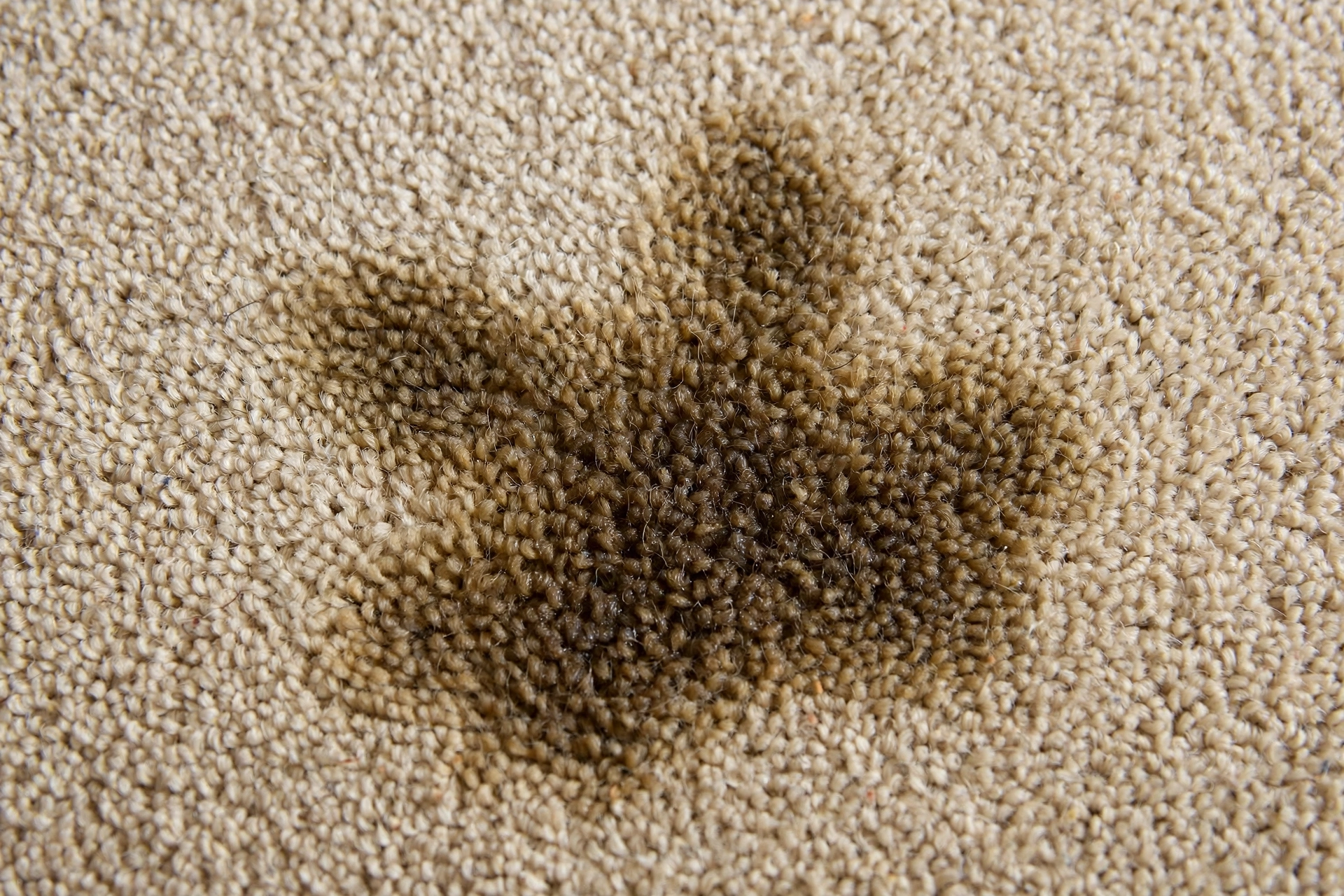
When Pet Odor Will Not Quit
Sometimes you do everything right and the smell comes back every humid afternoon. That usually means the urine reached the carpet padding or the subfloor. Surface cleaning, even good enzyme treatment, cannot reach contamination that deep. The padding acts like a sponge, holding urine that re-releases odor whenever moisture in the air reactivates it.
Signs the problem is below the surface: the odor intensifies in humidity, you can smell it strongest when you put your nose near the carpet (rather than standing up), or the same spot keeps drawing the pet back despite thorough cleaning. At this stage, DIY has reached its limit. The standard professional approach involves pulling back the carpet, treating or replacing the affected padding, sealing the subfloor if needed, and treating the carpet backing, which is specialized work described on our pet odor and stain removal page.
This is also why quick action matters so much with pets. A fresh accident cleaned in ten minutes is a surface problem. The same accident discovered the next morning may already be a padding problem. The difference between those two outcomes is often just a few hours.
Coffee and Red Wine: The Tannin Twins
Coffee and red wine are tannin stains, plant-based colorants that love to bond with carpet fibers. They respond well to fast action and poorly to delay.
Coffee: Blot immediately, then work cool water through the spot from the outside in. If a brown tinge remains, a solution of one tablespoon of white vinegar, one tablespoon of dish soap, and two cups of cool water, applied sparingly and blotted, handles most coffee stains. Rinse with plain water afterward and blot dry, because leftover soap residue attracts dirt.
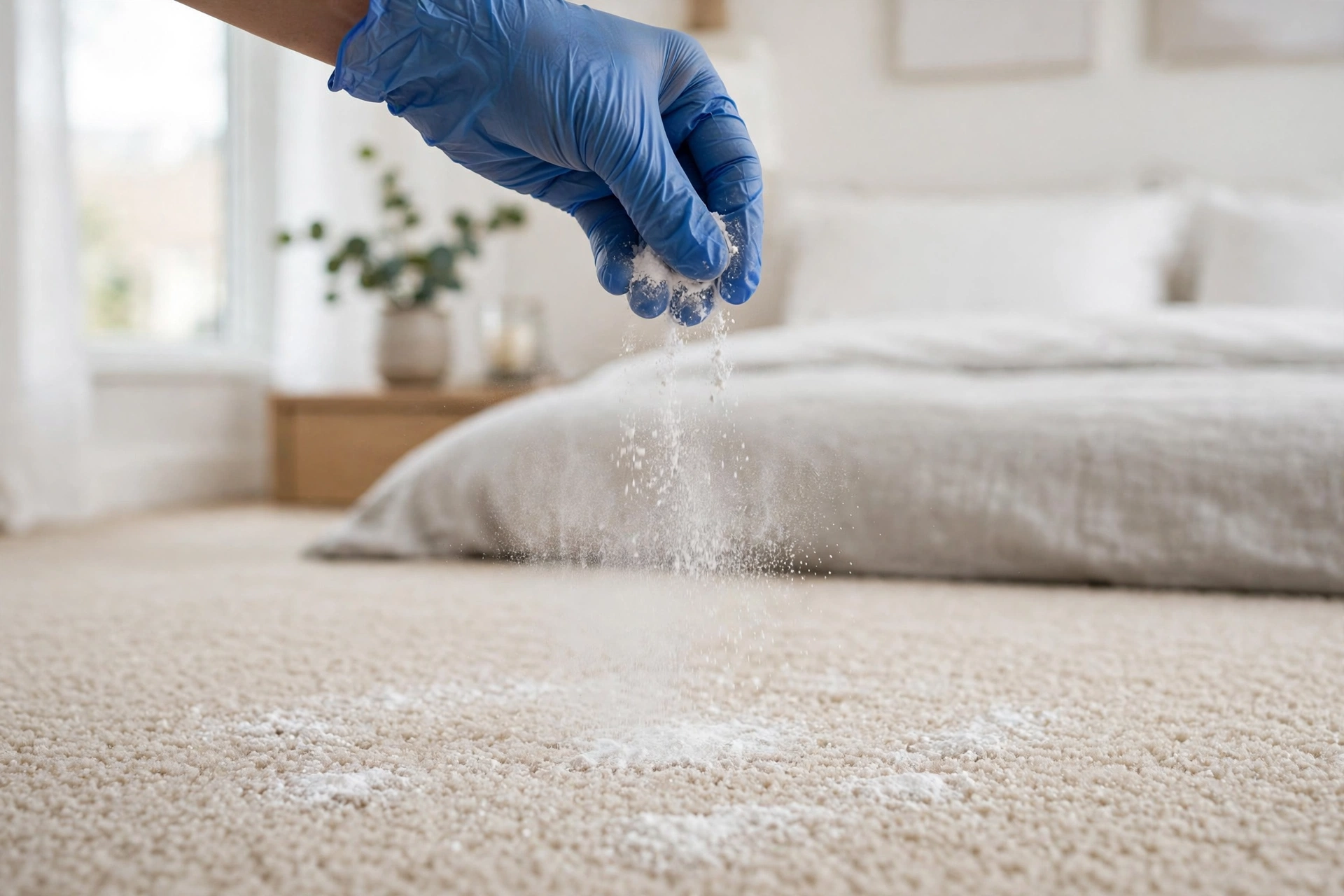
Red wine: Blot up as much as possible first, never rub. Cover the stain generously with table salt or baking soda, which draws the wine up out of the fibers as it sits. Let it sit for 15 to 20 minutes, vacuum up the salt, then treat any remaining pink tinge with the vinegar and dish soap solution above, or with a 3% hydrogen peroxide solution dabbed on carefully. Important: hydrogen peroxide is safe on many carpets at 3%, but anything stronger can bleach the fibers, so never go above that concentration. And as always, test in a hidden spot first.
The old advice about pouring white wine on red wine has a grain of truth, it dilutes the stain, but plain cool water does the same job without the bar tab. Speed beats cleverness every time with tannin stains.
Grease and Food Stains
Butter, pizza grease, salad dressing, and fried-food splatter are oil-based, and water alone will not touch them. The protocol: scrape off solids, blot up excess oil with dry towels, then apply a small amount of dish soap solution (dish soap is designed to cut grease) and work it in gently from the outside. Blot, rinse with cool water, blot again.
For stubborn grease, a dry-cleaning solvent or a dedicated grease spotter from the hardware store works better than dish soap. Apply it to a cloth, not directly to the carpet, dab the stain, and give it time. Grease stains often need two or three rounds. Patience beats aggression: scrubbing a grease stain just grinds oil deeper into the pile.
Ink, Paint, and Nail Polish
These are the stains that separate the calm from the panicked, because they look catastrophic and sometimes are. Stay calm and follow the chemistry:
- Ballpoint ink: Dab with rubbing alcohol on a white cloth, working outside in. The alcohol dissolves the ink; the cloth lifts it. Replace the cloth frequently so you are not redepositing ink.
- Water-based paint: If still wet, blot and rinse with cool water immediately. Dried latex paint can sometimes be softened with warm water and gently scraped, but expect a fight.
- Oil-based paint: Needs paint thinner or mineral spirits, used sparingly on a cloth in a ventilated room. This is flammable chemistry; ventilate well and keep it away from kids and pets.
- Nail polish: Let it dry completely first, counterintuitive but important, then use a small amount of non-acetone nail polish remover dabbed on with a cloth. Acetone-based remover can damage carpet backing and some fibers, so non-acetone is the safer choice. Test first.
Real talk: Half of stain removal is knowing when to stop. If you have worked a stain through three careful rounds and it is not improving, more scrubbing will not help. It will just damage the pile. That is the moment to either live with it, call a professional, or both, in that order of acceptance.
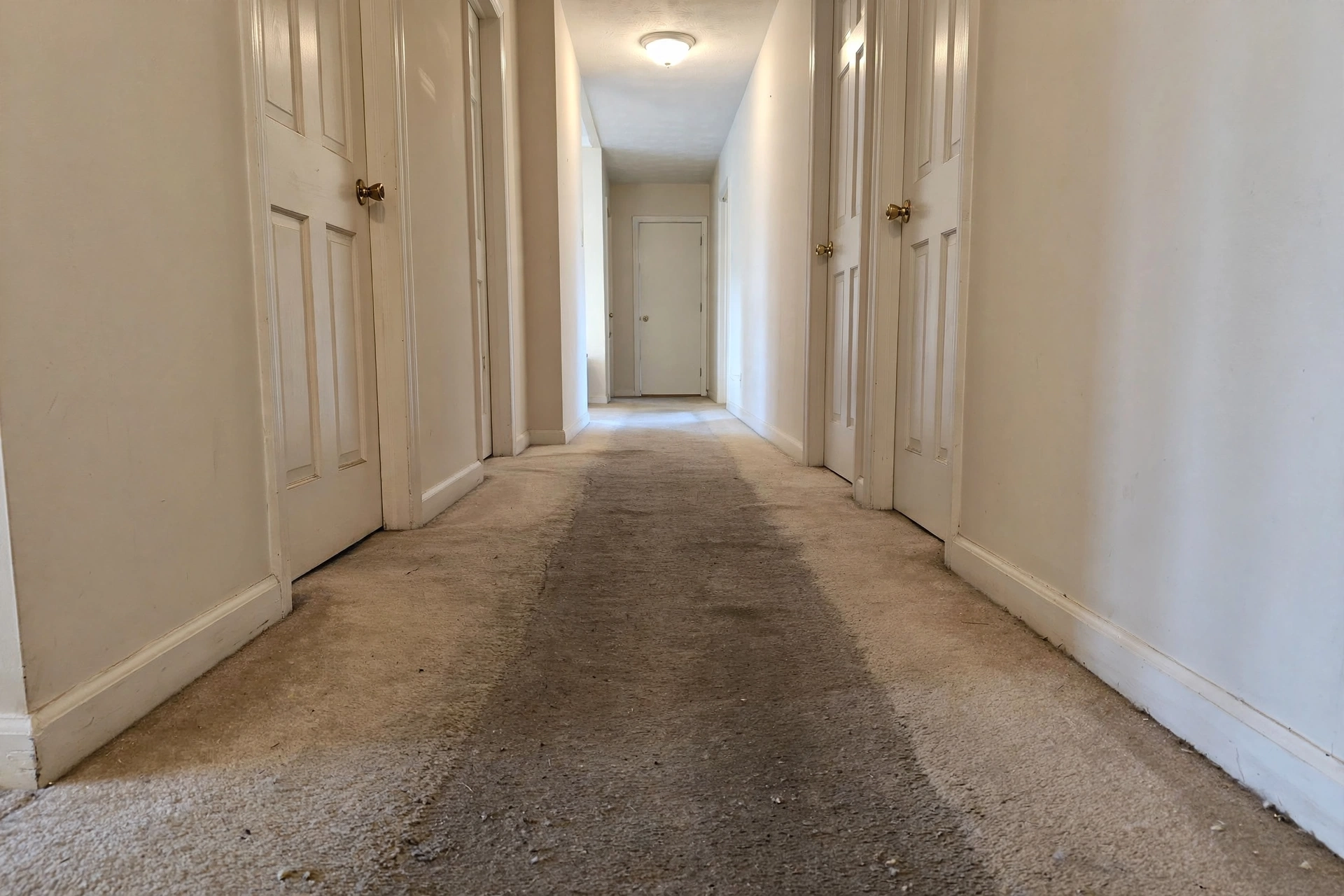
High-Traffic Wear Paths: When It Is Not Dirt
Here is something most homeowners do not realize: those grayish paths through the living room and down the hallway are often not dirt at all. They are wear. Every footstep bends carpet fibers, and thousands of footsteps crush the pile in traffic lanes while the carpet under furniture stays fluffy. Light then hits the crushed fibers differently, and the lane looks darker or duller. No amount of cleaning fully reverses fiber crushing, which is why a freshly cleaned carpet can still show traffic patterns.
What helps: regular vacuuming with a beater bar or rotating brush lifts matted pile before it sets. Professional deep cleaning removes the embedded abrasive grit, tiny sharp soil particles that act like sandpaper on fibers with every step, which is what actually causes most wear. This is why the Carpet and Rug Institute emphasizes both frequent vacuuming and professional deep cleaning every 12 to 18 months: vacuuming handles the surface, extraction handles the deep grit (Carpet and Rug Institute, n.d.).
What does not help: scrubbing the lane harder, using extra detergent, or cleaning it five times. If it is wear, chemistry cannot fix it. Rearranging furniture periodically to shift traffic patterns, using runners in hallways, and keeping a strict no-shoes policy all slow new wear far more effectively than any cleaning product.
Furniture Dents: The Easy Win
After the heavy topics, here is a satisfying one. Those deep dents where the sofa legs sat are just compressed pile, and they usually bounce back. Place an ice cube on each dent and let it melt completely; as the fibers absorb the water, they swell back upright. Once dry, fluff with a spoon edge, a coin, or a stiff brush, working against the pile direction. For stubborn dents, hold a steam iron a few inches above the spot (never touching the carpet) and let the steam relax the fibers, then fluff.
This works on synthetic carpets beautifully and on wool reasonably well. It does not work on carpet where the backing itself has been crushed or where years of weight have permanently deformed the pile. But for normal furniture dents, the ice cube trick feels like a magic trick the first time you see it work.
When a Stain Is Permanent: Knowing the Difference
Not every stain is a cleaning problem. Some are damage, and no cleaner, rental or professional, can reverse damage. Common permanent situations:
- Bleach spots: The color is chemically gone. The only fixes are carpet dyeing, patching, or replacement.
- Dye stains from colored liquids: Brightly dyed drinks, medicines, and some foods can permanently dye light carpet, especially nylon which accepts dye readily.
- Burn marks: Melted or scorched fibers are physically altered. Small burns can sometimes be trimmed carefully with scissors; larger ones need patching.
- Sun fading: UV exposure bleaches carpet unevenly near windows. This is gradual and irreversible, though rearranging furniture to even it out helps cosmetically.
- Filtration soiling: Those dark lines along baseboards and under doors come from air passing through carpet edges over years, depositing fine soot. They are extremely stubborn and often permanent because the soil bonds electrostatically.
A professional can sometimes improve these with specialty treatments, and a good technician will tell you honestly when they cannot. Be wary of anyone who promises to remove a bleach spot with cleaning. That is not cleaning; that is chemistry fiction.
Your Maintenance Routine: Weekly, Monthly, Yearly
The best stain troubleshooting is the stain that never sets. A simple routine prevents most of what this guide covers:
- Weekly: Vacuum high-traffic areas twice and the whole house once, using a CRI Seal of Approval certified vacuum if possible. Go slowly; fast vacuuming is decorative. Empty or replace the bag and filter regularly, because a full vacuum just redistributes dust.
- Monthly: Move small furniture and vacuum underneath and along baseboards where filtration soiling starts. Check under area rugs, grit accumulates there silently.
- As needed: Treat spills immediately using the ten-minute protocol above. Keep enzyme cleaner, white cloths, and a basic spotter on hand so you are never improvising.
- Every 12 to 18 months: Professional deep cleaning to remove the embedded soil your vacuum cannot reach (Carpet and Rug Institute, n.d.). Homes with pets or kids should go more often, every 6 to 12 months.
- Ongoing: No-shoes policy if you can manage it, doormats at every entrance (and clean the doormats), and runners on hard-surface-to-carpet transitions.
For area rugs, which many Clarksville homes layer over carpet or hardwood, the routine is similar but gentler: vacuum without the beater bar on delicate rugs, rotate them yearly for even wear, and send fine or wool rugs out for professional area rug cleaning rather than tackling them with a rental machine.
Real talk: Nobody follows a perfect maintenance routine, and that is fine. If you do just three things, vacuum slowly and often, kill spills in the first ten minutes, and get a real deep clean once a year, your carpet will outlast your neighbor's carpet by years. The routine does not need to be perfect. It needs to exist.
A Clarksville Note: Pets, Pollen, and Red Clay
Montgomery County homes face a specific trio. First, pets: Clarksville is a dog town, and between Fort Campbell families and suburban neighborhoods from Sango to Rossview, pet stains are the number one carpet complaint in the area. If you have dogs, keep enzyme cleaner stocked the way you keep dog food stocked.
Second, pollen. Middle Tennessee springs coat everything in yellow-green dust, and it tracks inside on shoes and paws straight into your carpet. During peak pollen weeks, vacuum twice as often and consider doormats as a first line of defense. What looks like graying carpet in April is often just pollen, and it vacuums out if you catch it early.
Third, red clay soil. The clay around Clarksville tracks in as fine reddish dust that works deep into pile and resists surface cleaning. Clay stains on light carpet are notoriously stubborn once set, so the ten-minute protocol matters double for muddy paw prints. A no-shoes policy earns its keep fastest in clay country.
Want It Done Right the First Time?
Free on-site walkthrough, written pricing before any work begins. Serving Clarksville and Montgomery County.
Call (931) 440-5353Frequently Asked Questions
What is the first thing I should do when something spills on carpet?
Blot immediately with a clean white cloth, working from the outside of the spill inward, and never rub. Remove solids first, use cool water as your first cleaning liquid, and test any cleaning product in a hidden spot before using it on the stain.
Can pet urine smell ever be fully removed from carpet?
Fresh accidents usually can, with fast blotting and enzyme cleaners that digest uric acid crystals. But once urine soaks into the padding or subfloor, surface cleaning cannot reach it, and the odor returns whenever humidity rises. Deep contamination typically needs professional pad-level treatment.
Is it safe to use hydrogen peroxide on carpet stains?
A 3% hydrogen peroxide solution is safe on many carpets for spots like red wine or blood, but never use anything stronger, as higher concentrations can bleach fibers. Always test in an inconspicuous area first, and never use it on wool unless you have verified it is safe for the specific carpet.
Why do traffic lanes still look dirty after cleaning?
Because it is usually wear, not dirt. Thousands of footsteps crush carpet fibers in traffic lanes, changing how light reflects off them. Cleaning removes soil but cannot un-crush fibers. Regular vacuuming with a rotating brush slows the crushing, and rearranging furniture shifts the wear pattern.
How do I get furniture dents out of carpet?
Place an ice cube on each dent, let it melt completely so the fibers absorb the water and swell upright, then fluff with a spoon edge or stiff brush once dry. Steam from an iron held above (not on) the carpet also relaxes stubborn dents.
When should I stop trying to remove a stain myself?
After three careful rounds with the right method and no improvement, stop. Further scrubbing risks permanent pile damage. Bleach spots, burns, sun fading, and dye transfer are damage rather than dirt, and they need repair, dyeing, or patching rather than more cleaning.
References
Carpet and Rug Institute. (n.d.). Cleaning and maintenance. https://carpet-rug.org/carpet-for-homes/cleaning-and-maintenance/
Double Take Carpets. (2026). How often should you professionally clean your carpets? [Complete guide 2026]. https://dtcarpets.com/how-often-should-you-professionally-clean-your-carpets/
Purge Bright. (2026). DIY vs professional carpet cleaning: What really changes the result? https://purgebright.co.uk/diy-vs-professional-carpet-cleaning/